

Biodiversity · Western Ghats
The lion-tailed macaque
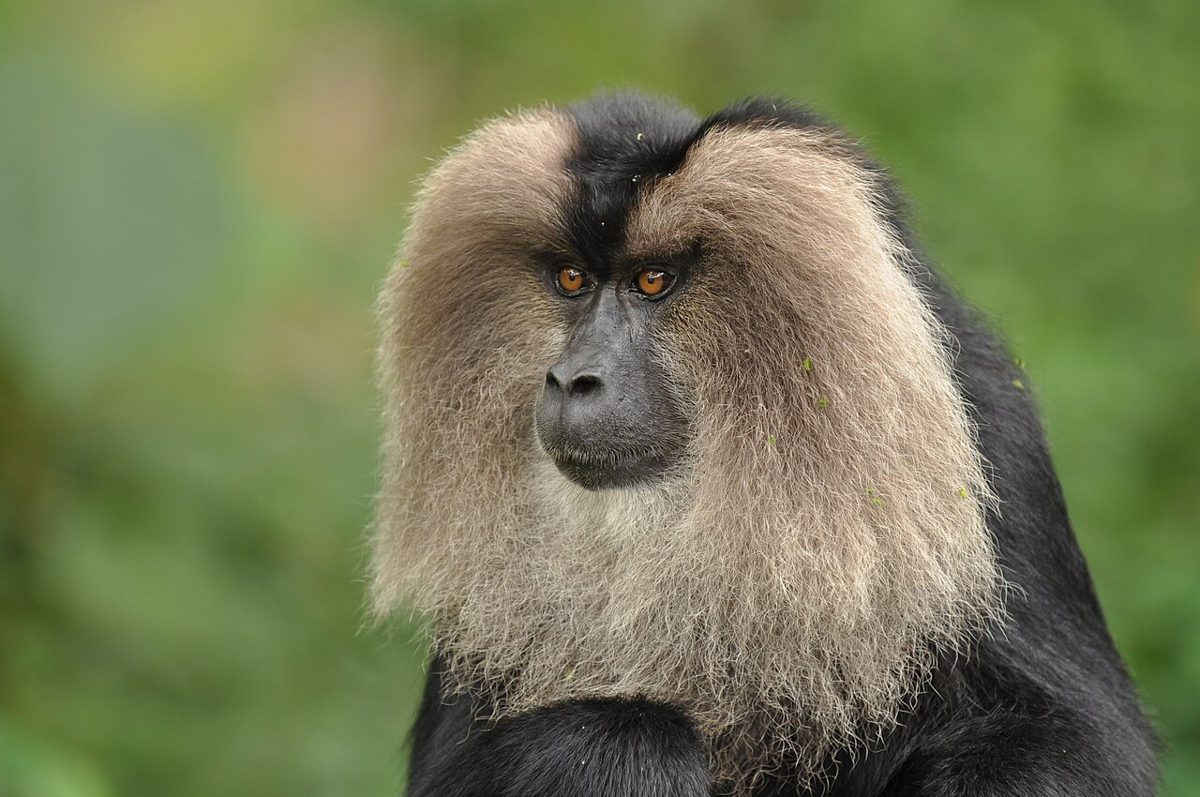
A black monkey with a silver mane and a tufted tail, found only in the Western Ghats. The forests between Sirsi and Honavar hold the northernmost population of the species, one of its most important.
A surprise discovery
For years the lion-tailed macaque was thought to survive mainly in Kerala and Tamil Nadu. In 2004 primatologists H. N. Kumara and Mewa Singh reported a self-sustaining population of 32 groups in the rainforests between Sirsi and Honavar, the northernmost population of the species.
Elsewhere in Karnataka the news was bad. Around 1985 there were thought to be about 3,000 in the state. By 2009, groups in Talakaveri, Pushpagiri and the old Sharavathi Valley sanctuary had fallen by 69%, mainly because of hunting between 1960 and 1990. The Sirsi–Honavar population, over 750 animals in reserve forests, was described as possibly the only viable one in Karnataka.
Counting the macaques
A SACON study around 2008 estimated 638 macaques in 31 groups, living between 342 and 750 m. The most recent study counted about 730 in 41 groups in 2022: 36 groups north of the Sharavathi River and 5 to the south. Average group size fell from about 25 to 18, which the researchers read as groups splitting in good habitat.
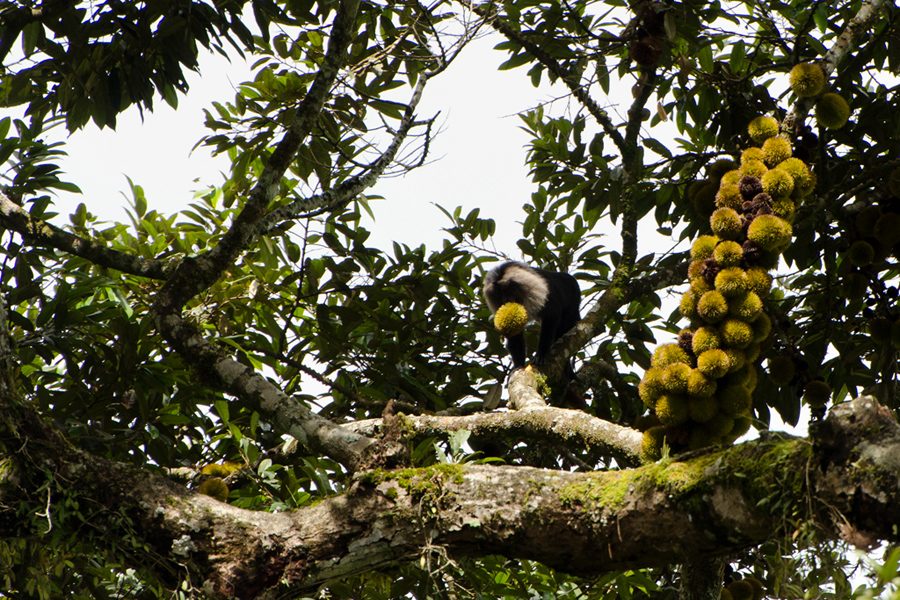
The southern groups are the most at risk. Threats include farms spreading into forest, fragmentation, road kills, electrocution, firewood and Garcinia fruit collection and new infrastructure. The researchers recommend managing the whole sanctuary as one unit. To the south, the Kudremukh–Someshwara–Mookambika forests hold at least 585 more in 39 groups.
Protecting their home
In 2019 the Karnataka government expanded the Sharavathi Valley Wildlife Sanctuary to about 930 km² and renamed it the Sharavathi Lion-tailed Macaque Wildlife Sanctuary. It now joins the forests of Shivamogga and Uttara Kannada, including the former Aghanashini LTM Conservation Reserve. See protected areas.
Lion-tailed macaques are shy. If you are lucky enough to see them, keep quiet, keep your distance and never feed them. Food from people leads monkeys onto roads and into conflict.
Research behind this page (6)
- Kumara H.N. & Singh M. (2004). Distribution and abundance of primates in rain forests of the Western Ghats, Karnataka, India and the conservation of Macaca silenus. International Journal of Primatology 25(5): 1001–1018.
- Kumara H.N. & Sinha A. (2009). Decline of the endangered lion-tailed macaque Macaca silenus in the Western Ghats, India. Oryx 43(2): 292–298.
- Kumara H.N., Vijay Mohan Raj R. & Santhosh K. (c. 2008). Assessment of the important wildlife habitat in Sirsi–Honnavara forest divisions. SACON report.
- Kumara H.N. et al. (2025). Population trend and management prospects for the lion-tailed macaque in the Sharavathi LTM Sanctuary.
- Ramesh Kumar P., Kumara H.N. et al. (2018). Conservation status of primates in the Central Western Ghats, Karnataka. Primate Conservation 32.
- Energy & Wetlands Research Group (2012). Exploring biodiversity and ecology of Central Western Ghats. ENVIS Technical Report 39, Centre for Ecological Sciences, Indian Institute of Science (IISc), Bengaluru.
More biodiversity
Plan your trip
Ready for the river and the sea?
Pick a stay, choose an itinerary and book online on the property's site or a booking platform.