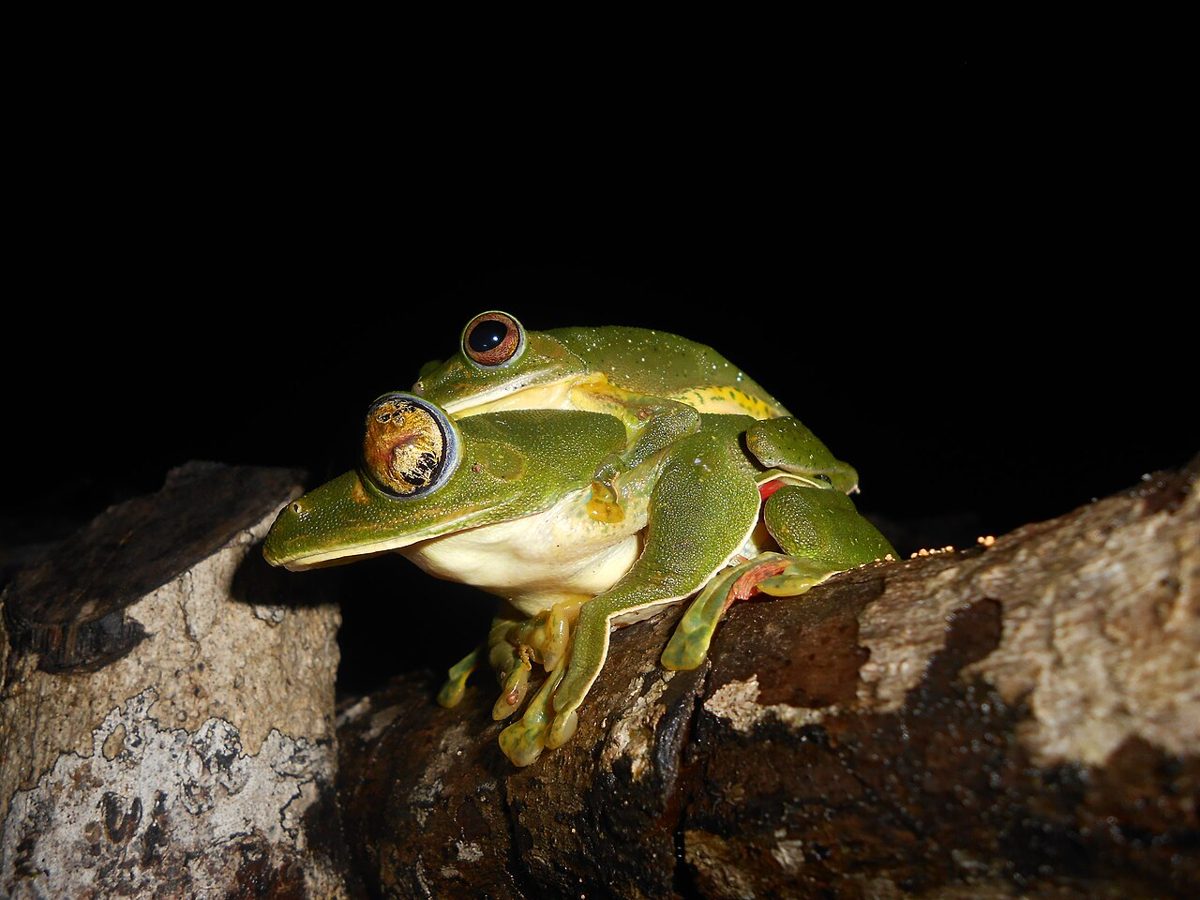
Malabar gliding frog
Rhacophorus malabaricus
Glides between trees on webbed feet and lays foam nests on leaves over water.
Photo: Nireekshit, CC BY-SA 4.0
Biodiversity · Wildlife
When the monsoon arrives, the forests behind Honavar fill with the calls of frogs, many of them found nowhere else on Earth. Several were first described by scientists working in the Sharavathi River basin.
An IISc study recorded 47 amphibian species in nine families in Uttara Kannada, 31 of them found only in the Western Ghats. The Sharavathi River basin is the richest part of the district, with 45 species. The swamp forest of Kathalekan alone has 34, 24 of them endemic.
Endangered species recorded here include the Malabar tree toad (Pedostibes tuberculosus) and the Wayanad bush frog (Pseudophilautus wynaadensis).
Rhacophorus malabaricus
Glides between trees on webbed feet and lays foam nests on leaves over water.
Photo: Nireekshit, CC BY-SA 4.0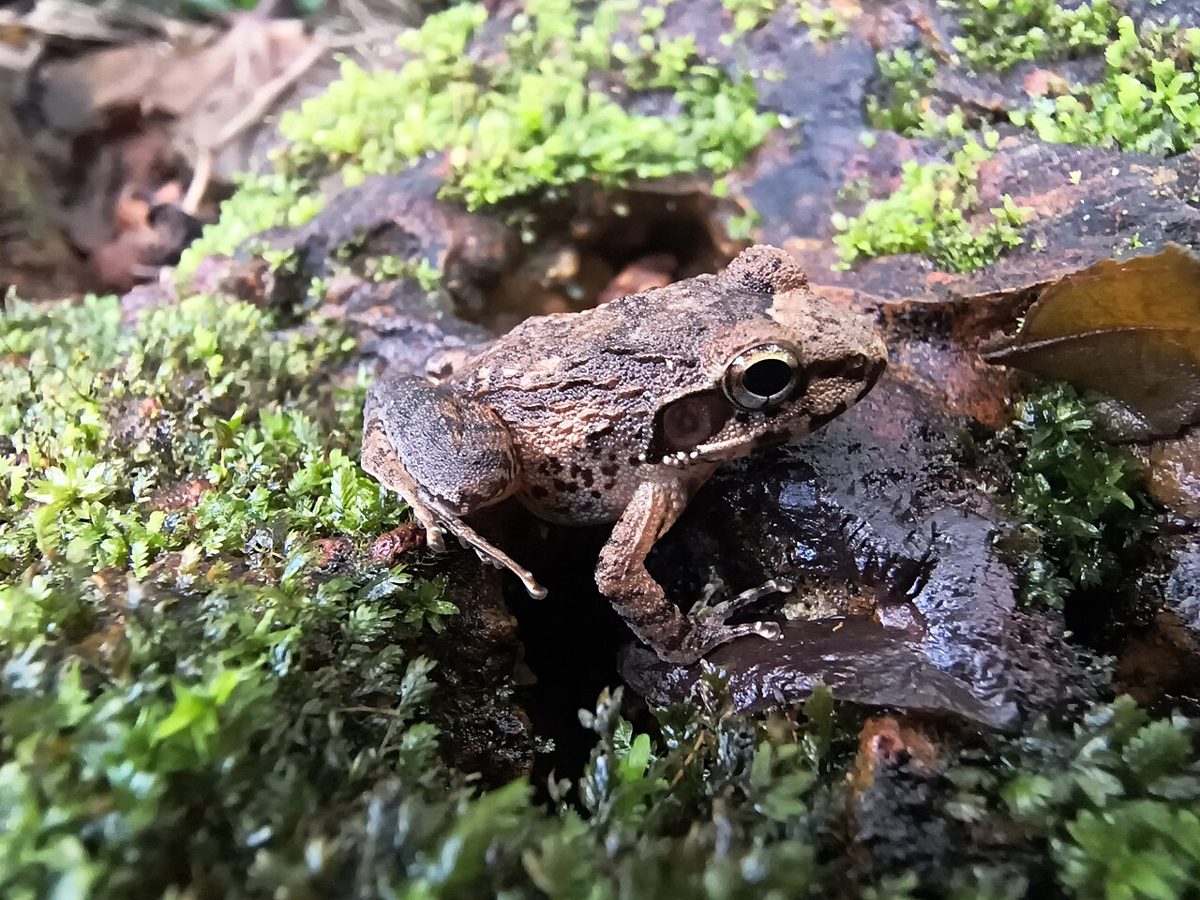
Indirana spp.
Small frogs of wet rocks and leaf litter. Indirana beddomii and I. semipalmata are recorded here.
Photo: iNaturalist user "Kishore", CC BY 4.0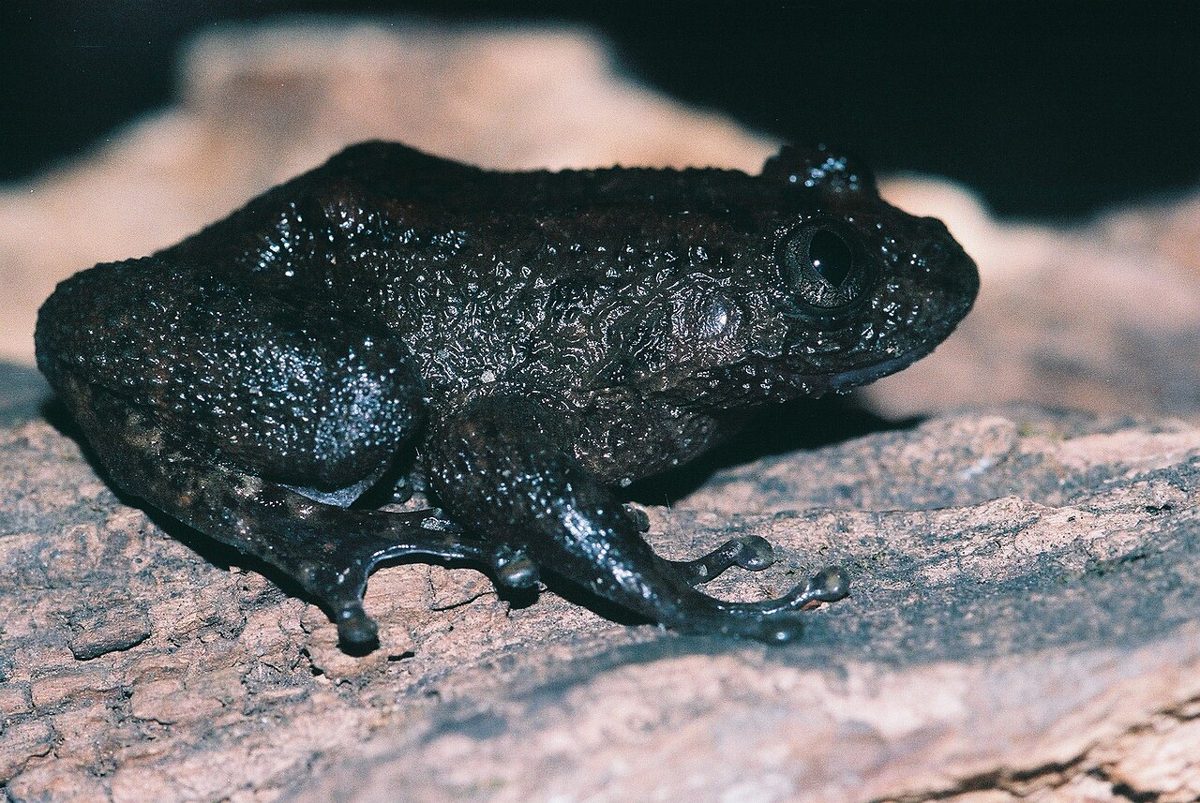
Nyctibatrachus spp.
Stream frogs of the Ghats. Two were named from this landscape (see below).
Photo: Saurabh Kulkarni, Public domain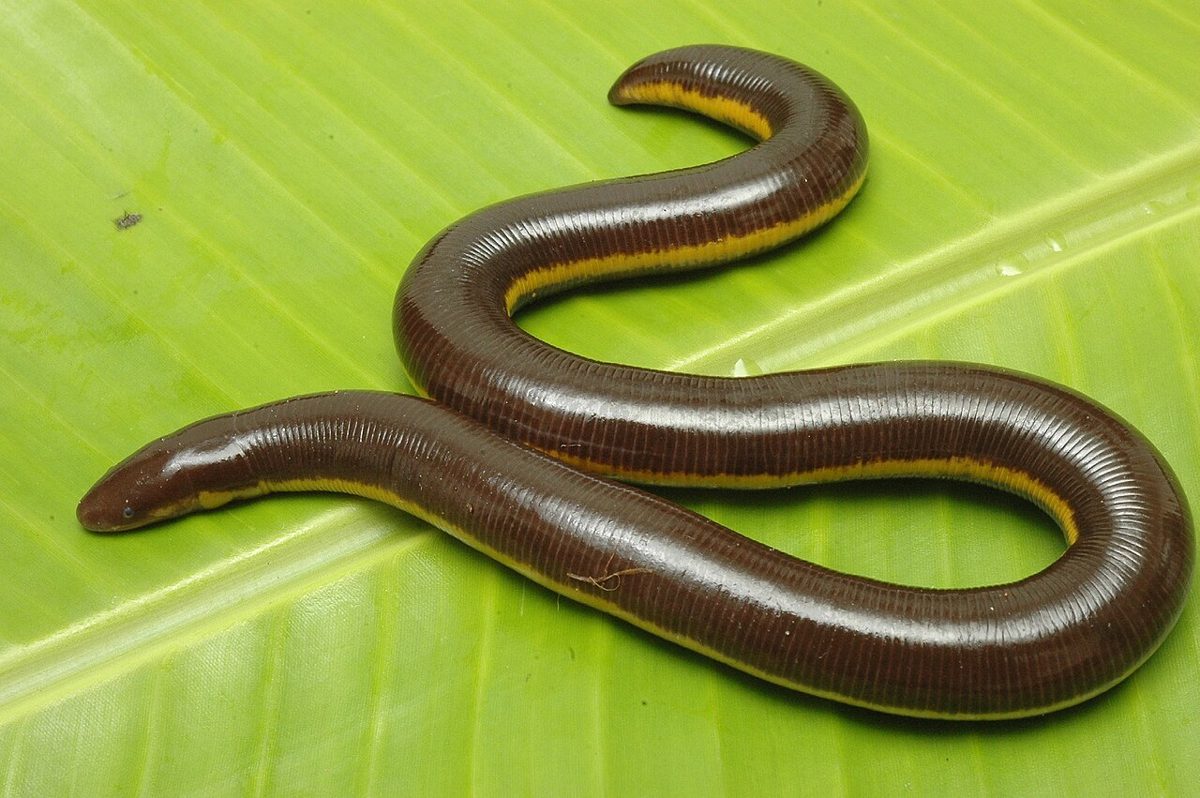
Ichthyophis spp.
Legless amphibians that live in soil. Ichthyophis beddomei and I. bombayensis are recorded in Uttara Kannada.
Photo: G. Bhatta, CC BY 4.0Micrixalus spp.
Males wave their legs to signal over the noise of streams. Micrixalus saxicola is recorded here.
Mud-packing frog (Nyctibatrachus kumbara, 2014): described from Kathalekan. Its name means 'potter' in Kannada, because the female coats her eggs in mud.
Jog night frog (Nyctibatrachus jog, 2011): named after Jog Falls on the Sharavathi River.
Northern dancing frog (Micrixalus uttaraghati, 2014): one of many dancing frogs described in a major study of the genus.
Blue-eyed bush frog (Philautus neelanethrus, 2007): described from the Sharavathi River basin, now treated as the same species as Raorchestes luteolus.
Surveys of five Myristica swamps found 22 reptiles, including 13 snakes. The Sharavathi LTM sanctuary lists the king cobra and the Indian rock python. Most snakes are harmless and shy. If you see one, step back and let it move away.
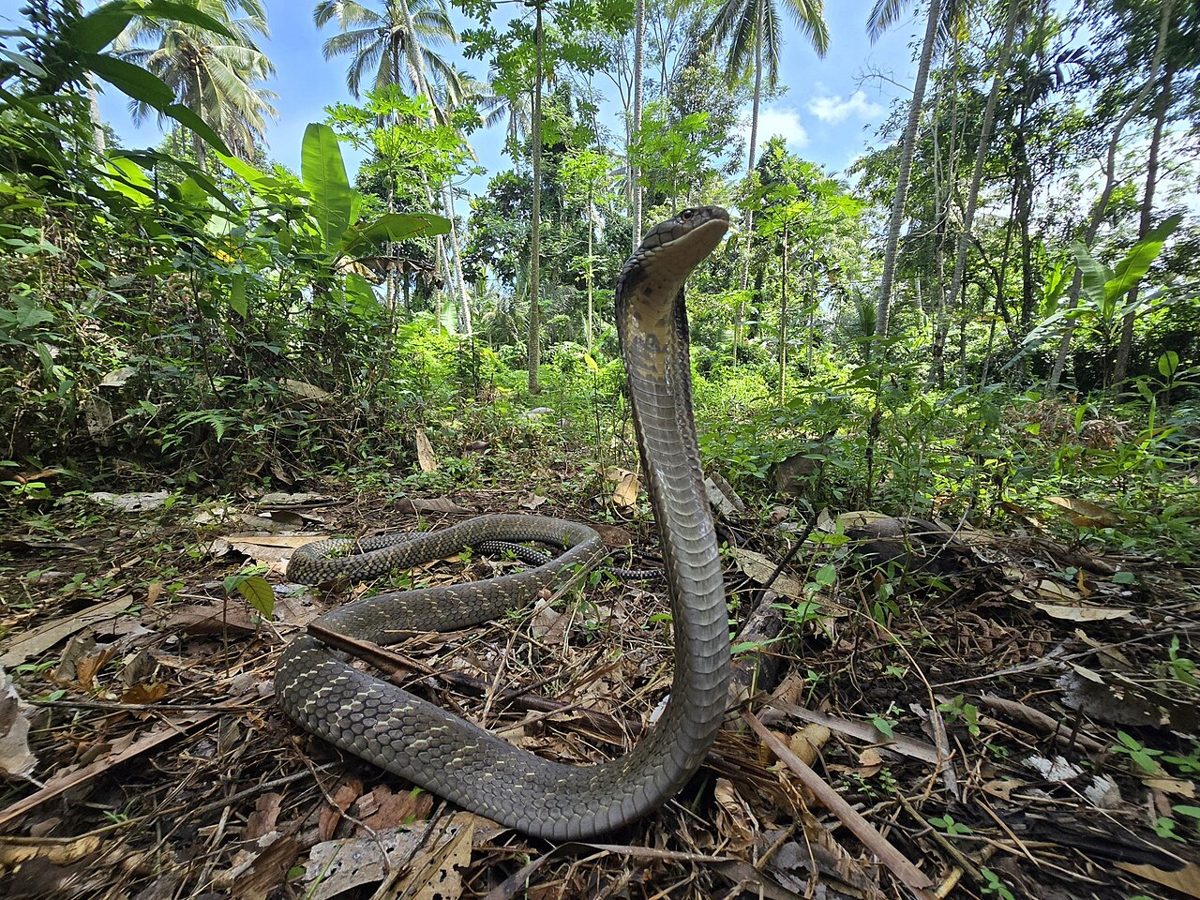
Ophiophagus hannah
The world's longest venomous snake, which feeds mainly on other snakes. Recorded in the Sharavathi LTM sanctuary.
Photo: Max Tibby, CC0A study of roads in the Sharavathi River basin found 144 dead amphibians of 13 species, an average of 40 per km and 55 per km through forest. Drive slowly on forest roads on rainy nights.
The best time to hear and see frogs is the monsoon, from June to September. Go with a local naturalist, use a dim torch, do not handle frogs and keep to paths.
Plan your trip
Pick a stay, choose an itinerary and book online on the property's site or a booking platform.