

Olive Ridley sea turtles
Olive Ridley FAQ
Answers to the questions people ask most about Olive Ridley sea turtles and their nesting at Honavar.
Why is it called the Olive Ridley?
For the olive-green colour of its shell. It is one of the smallest sea turtles, with a shell about 60 to 70 cm long, weighing around 35 to 45 kg.
Where do Olive Ridleys nest in India?
The biggest nesting sites are in Odisha, at Gahirmatha, Rushikulya and the Devi river mouth, where thousands of turtles come ashore together in mass nestings called arribadas. Along the west coast they nest alone or in small numbers. Tonka Beach at Honavar is one such site.
When do they nest at Honavar?
Roughly from November or December to March or April. Females come ashore at night, dig a pit about knee-deep in dry sand and lay 100 to 150 eggs before covering the nest and returning to the sea.
How long do the eggs take to hatch?
About 45 to 60 days, depending on the warmth of the sand. Like all sea turtles, the temperature of the nest decides whether hatchlings are male or female: warmer sand produces more females.
Do females really return to the beach where they were born?
Yes. Sea turtles show natal homing: adult females return to nest on or near the beach where they hatched, sometimes after travelling thousands of kilometres.
What do Olive Ridleys eat?
They are mainly carnivorous, eating crabs, shrimp, molluscs, jellyfish and fish, with some algae.
Are they endangered?
The IUCN lists the Olive Ridley as Vulnerable. In India all sea turtles are protected under Schedule I of the Wildlife (Protection) Act, 1972, the highest level of protection.
How long do they live?
Lifespans in the wild are not well known. They are thought to live for several decades and to take more than ten years to mature.
What threatens them at Honavar?
Construction and loss of sandy beach, bright lights at night that confuse nesting females and hatchlings, stray dogs digging up nests, plastic and fishing nets at sea.
Why do turtles matter?
Sea turtles move nutrients from sea to shore when they nest, keep jellyfish and crab populations in check and are a good indicator of the health of the coast. In India the turtle is also revered as Kurma, the second avatar of Vishnu.
Can I see turtles nesting or hatching?
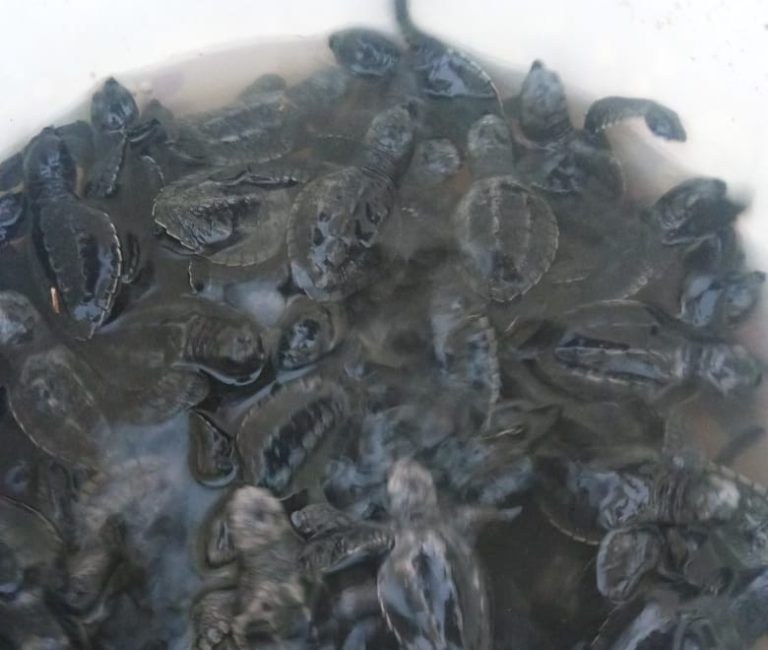
Nesting happens at night and nests are protected, so do not disturb them. Join Saturdays for the Sea or ask Honavar Foundation about hatchling releases, which happen with the Forest Department in the early morning.
Plan your trip
Ready for the river and the sea?
Pick a stay, choose an itinerary and book online on the property's site or a booking platform.